
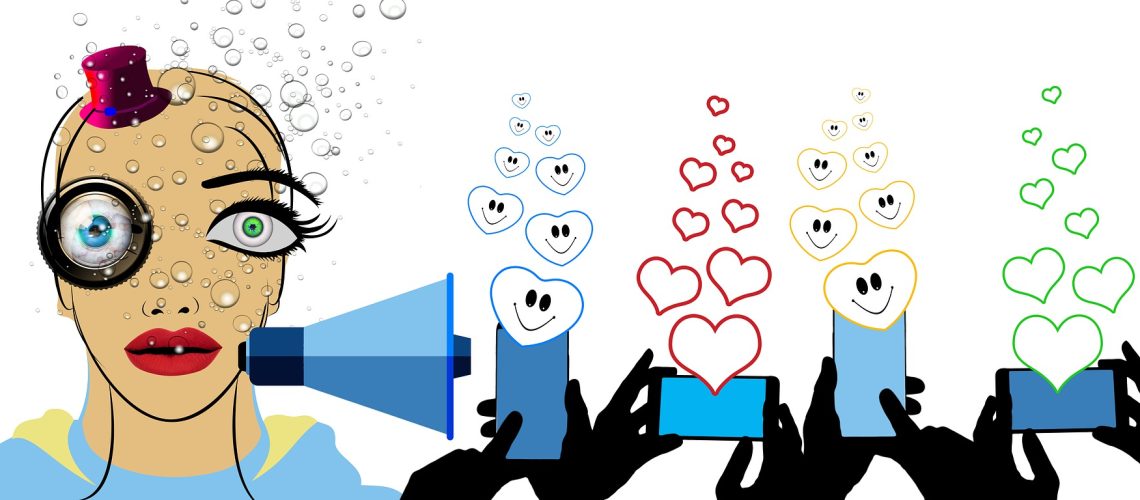
The Rise of the Instant-Mix Guru
As an Osteopath in Kuala Lumpur, and through my work as an Osteopath, Naturopath, and Fitness Professional over the last two and a half decades, I’ve witnessed both the positive and problematic sides of the modern wellness explosion. On one hand, it’s encouraging to see more people becoming interested in health, fitness, and preventative medicine. But on the other, the rapid growth of the wellness industry has also created an overwhelming amount of noise, confusion, and distraction from the timeless foundations of genuine health and vitality.
One of the biggest consequences of this wellness boom has been the rise of the modern “coach.”
Today, there seems to be a coach, mentor, or guru for almost everything. With social media providing a global platform and very little regulation around wellness advice, the industry has started to resemble the wild west, where confidence and visibility often matter more than competence and experience.
Scroll on any social media platform for five minutes and you’ll see it.
Another coach, another influencer, another self-proclaimed expert telling us how to live, eat, train, think, scale, heal, optimise, hack, or reinvent ourselves. We’re living through an unprecedented explosion of coaches and gurus, all claiming they can fix our flawed humanness while often delivering more ideology than substance.
At the same time, as the internet becomes noisier, the less time people seem willing to spend actually thinking, researching, or challenging what they’re being told.
We now live in a world of fragmented attention spans, algorithm-fed certainty, and instant opinions. Most people don’t go looking for truth anymore, they go looking for confirmation. We consume content in 15-second bursts, absorb headlines instead of depth, and increasingly outsource critical thinking to confident people with captivating content, good lighting and a decent microphone.
The modern expert economy thrives in this environment, not because wisdom has increased, but because visibility has.
The New Authority Problem
Before social media and digital platforms, credibility was usually built slowly, through years of education, practical experience, results, peer respect and real-world application. Today, perceived authority can be manufactured in a few months using a handful of strategic ingredients:
- a well-designed Instagram page
- a few confident videos
- a recycled framework
- clever positioning
- a dramatic personal story
- some cinematic background music
And suddenly someone becomes a “thought leader.”
In the modern attention economy, presentation is increasingly mistaken for proof. We reward visibility over experience, confidence over competence, and delivery over understanding.
Because most people are now consuming so much information laterally instead of vertically, few will take the time to ask:
- Where does this information come from?
- Has this actually been tested and proven in the real world?
- Can this person truly understand complexity, or are they just repackaging ideas?
The result is a world full of highly marketable certainty, with very little nuance.
The Fear Economy
Much of modern coaching is built on a timeless formula: First convince people they’re lacking something, then sell them the missing piece.
We now have coaches for almost every human experience imaginable:
- biohacking
- breathing
- high performance
- masculinity
- menopause
- posture
- purpose
- shadow work
- trauma release….
Normal human struggles have now become huge marketing opportunities with self-proclaimed experts telling us how to deal with every experience of our lives.
The longevity space is one of the greatest examples of the fear economy. An entire industry built around the fear of ageing, treating a normal human process as though it’s a software bug that can be optimised away if we just buy enough supplements, inject peptides, infusions and use wearable technology.
Feeling tired?
There’s a coach.
Feeling low?
There’s a coach.
Feeling fine?
There’s a coach.
Breathing incorrectly while carrying unresolved childhood trauma, during a dopamine crash?
Apparently there’s a coach for that too!
Life Has Become One Big Optimisation Project
The wellness craze frames normal emotions and challenges as optimisation opportunities that require protocols, apps, supplement stacks, masterclasses and healing.
And the coaching carrots are almost always dangled in the same way:
- “The one thing you’re not doing…”
- “The hidden block sabotaging your success…”
- “Why you’re still unhappy…”
- “The mistake keeping you stuck…”
- “Until you fix this, nothing changes…”
It’s an old playbook because it works. Fear captures attention, insecurity drives engagement, and humans are naturally drawn toward certainty, shortcuts, and quick fixes.
That’s not always coaching, it’s often just positioning.
Why We’re So Susceptible
Part of the reason this works so well is because our brains are wired for efficiency, not necessarily truth. From an evolutionary perspective, humans evolved to prioritise fast answers and energy conservation. In survival environments, a quick decision was often more valuable than a perfectly accurate one.
That wiring now shows up in modern life as:
- attraction to hacks
- obsession with shortcuts
- black-and-white thinking
- emotional reactions over analysis
- low tolerance for nuance
“Social media amplifies all of this because algorithms tend to reward engagement more than careful thought, favouring certainty, speed, outrage, and simplification over nuance and integrity. The more emotionally charged the message is, the more attention it receives.
Add increasingly fragmented attention spans into the mix, and you create the perfect conditions for shallow thinking were people skim instead of study, react instead of reflect and repeat instead of research
Most people no longer investigate beyond what already aligns with their existing beliefs, and once somebody becomes emotionally attached to a worldview, they often stop asking whether it’s actually true or not.
The Romanticised Transformation
Another pattern I see constantly is the selling of transformation with seductive messaging, without the reality of transformation itself.
“Effortless fat loss”
“Scale to 7 figures without burnout”
“Unlock your highest self”
“Heal your life in 30 days”
“Completely reinvent yourself”
In reality transformation is rarely neat or fast. It’s repetitive, uncomfortable, grounded in basics, and built through consistency, not short bouts of intensity.
The gap between the promise and the process is where many people become disillusioned, so they start looking for the next guru, framework. or missing piece.
Biohacking (AKA Naturopathy)
One of the more interesting trends in recent years has been the rise of “biohacking.” What was once a fringe term associated with Silicon Valley entrepreneurs and extreme self-optimisation has now become mainstream wellness culture. Cold plunges, fasting, circadian rhythm optimisation, breath work, light exposure, nervous system regulation, sleep tracking, and grounding are now packaged as cutting-edge performance strategies.

Yet, from my perspective as an Osteopath, Naturopath, and Fitness Professional, much of what is now labelled biohacking is simply a modern rebrand of principles and interventions that naturopathic healthcare practitioners have been applying for decades.
Long before wearable technology and wellness influencers turned these ideas into trends, naturopathic medicine was already emphasising the importance of sleep quality, whole foods, movement, stress reduction, sunlight exposure, digestive health, recovery, and creating an environment where the body could function as it was biologically designed to.
The irony is that many of the most effective interventions are also the least glamorous. They don’t require expensive gadgets, personalised supplement stacks, or futuristic terminology.
Consistent sleep patterns still outperform most recovery hacks.
Daily movement still matters more than optimisation culture.
Eating real food still beats the latest supplement stack.
Managing stress, building strong relationships, spending time outdoors, and respecting the body’s natural rhythms still form the bedrock of health and resilience.
Modern biohacking often presents these concepts as revolutionary discoveries, when in reality many are simply rediscoveries of old wisdom through the lens of modern branding and technology.
Technology itself is not the problem. Data can be useful. Wearables can increase awareness. Certain advanced interventions may have value in specific contexts. But somewhere along the way, wellness became more focused on hacking the human body than understanding it. We became obsessed with optimisation while simultaneously neglecting the basic behaviours that human health has always depended on.
The most profound form of “biohacking” is simply returning to the fundamentals humanity evolved around in the first place.
The Great Irony: More Help, Yet More Sickness
Perhaps the strangest paradox of the modern coaching explosion is this:
Despite having more wellness experts, frameworks, self-help content and health technology, people are becoming increasingly unhealthy, both mentally and physically.
Rates of lifestyle related disease anxiety, depression, absenteeism, presenteeism, metabolic disease, loneliness, and chronic stress continue rising globally.
We have more information than any generation in history, yet many people are more exhausted, distracted, overstimulated, and disconnected than ever before.
Part of the problem is that modern humans are trying to function optimally inside environments that were never designed for our wellbeing.
We evolved in environments that exposed us to constant physical activity, sunlight, real food, social connection, and nature. Modern life, meanwhile, is increasingly built around:
- Individuality
- Chronic stress
- urban environments
- indoor and sedentary living
- poor quality food
- endless stimulation
Instead of adapting to this reality by doubling down on the fundamentals, we often search for increasingly complex solutions to problems rooted in a basic biological mismatch. People are chasing supplements, hacks, dopamine fixes, and optimisation protocols while simultaneously: sleeping poorly, barely moving, eating crap, staring at screens all day, staying indoors most of the day and living in a constant state of chronic stress.
Modern wellness culture sells complexity and illusory shortcuts to people who are failing at the fundamentals of:
- movement
- sleep
- nutrition
- stress regulation
- relationships
- consistency
Perhaps the the uncomfortable reality much of the wellness industry struggles to admit is that most people don’t need a coach, they need a self-audit to mentally align themselves with the above basics.
Now I’m not here to throw all coaches under the bus because there are some great coaches out there doing amazing work, but there’s also a lot of charlatans. That’s why it’s important to have a framework to separate the wheat from the chaff, rather than being hypnotised by nice videos and thousands of followers. Our needs are unique and our time is precious, so before you part with your time, money and energy, ask the following questions before investing in a mentor or coach.
1- Credentials: Can They Be Trusted on Paper?
This is the lowest bar, but still an important filter.
Ask:
- Do they have recognised qualifications relevant to what they teach?
- Are they certified by legitimate institutions?
- Is their expertise formal or entirely self-declared?
Credentials don’t guarantee effectiveness, but in fields like health, finance, and professional development some baseline of academic competence and experience is reassuring.
2- Experience: Have They Actually Done the Thing?
This matters far more.
- Have they personally applied what they teach?
- How many years have they been doing it?
- Have they worked with real people in real situations?
Experience creates pattern recognition, adaptability, practical understanding and nuance Theory without lived application is often fragile and shallow.
3- Credibility: Do Their Results Speak for Them?
This is the highest-value filter and the one many people skip.
Look for:
- consistent results
- independent testimonials ( a strong community is a seal of approval)
- long-term outcomes
- respect from other credible professionals
Real credibility exists beyond self-promotion. Strong marketing can manufacture attention, but it cannot consistently manufacture results over time.
How to Discern Who to Trust
As mentioned earlier, there are excellent coaches out there, the key is learning how to separate substance from surface.
Look for Lived Evidence, Not Just Claims
Not highlight reels.
Not motivational quotes.
Not cinematic transformation videos.
Look at how they live and whether they consistently embody what they teach, because consistency beats intensity.
Pay Attention to Their Messaging
Do they constantly make you feel deficient and reliant by focusing on the pain points, problems or voids?
Or do they:
- build agency
- simplify complexity
- empower rather than overwhelm
- tell the hard and uncomfortable truths without theatrics or people-pleasing
Good coaching creates clarity, not dependency.
Ask: Is This Sustainable in Real Life?
Could a normal human being with:
- responsibilities
- children
- work stress
- imperfect routines
…actually sustain what’s being recommended, or does it only work under perfect conditions?
If it only works in ideal circumstances, it probably doesn’t work at all.
Watch for Overpromising
Fast results aren’t always fake, but when everything sounds. effortless, guaranteed, frictionless and revolutionary, you’re usually being sold an outcome instead of a process.
Habits, routines and processes are what actually change lives.
The Real Role of a Coach
A good coach doesn’t position themselves as the hero, they are a team mate who is beside you to:
- guide
- challenge
- simplify
- educate
- build independence
They don’t make you feel inferior. They help you realise you’re more capable than you think when the right fundamentals are applied consistently. Real coaching should gradually make people less dependent, not permanently reliant.
Final Thought
The already noisy ‘wellness’ space doesn’t need more instant-mix gurus. It needs more reality, honesty and accountability from people who are more committed to personal and professional integrity than learning how to package and present a shiny version of themselves to the world.
People who are honest about the challenges, discomfort and grind of real transformation.
People who care more about substance than status, results than relevance, and empowering people rather than collecting followers.
The reality is that meaningful change is usually slower, messier, and less glamorous than it appears on social media.
But in the end, when all is said and done, the real question is:
Are you really ready to do what it takes to get the results you want because I believe that when the student is ready, the teacher will appear.
Always choose integrity over influence.
