The Creep of Modern Life
Over the last 15+ years of working as a healthcare professional across 3 different continents, I have noticed something strange has been happening to modern life, and most of us have watched it unfold without quite registering how strange it actually is.
It hasn’t arrived as a single dramatic event. It’s crept up insidiously, in the form of conveniences that seem reasonable in isolation- food that lasts longer on shelves, entertainment that never runs out, daily tasks that no longer require us to leave the sofa, work that follows us home on our phones, drugs that control our appetite, and large language models that give us answers before we’ve had time to think, ideas before we’ve had time to create, and solutions before we’ve had time to struggle.
Each development on its own looks like progress, but compound them over two or three decades, and they’ve gradually rewritten what a normal day looks like- less movement, more stress, poor recovery, less unstructured time, less human connection, more unhealthy food, more distraction, numbness, disembodiment and instant gratification.
In general- increasingly less requirement for and use of some of the most fundamental physical and cognitive resources that make us healthy, resilient and intelligent human beings.
None of these progressions were designed to harm us. They were designed to make things easier, faster, convenient and more engaging. But it’s now very clear that easier and healthier are two very different destinations.
We’ve spent decades focusing on making life easier. Maybe it’s time to pay attention to what we’re losing by doing so.
The Clearest Evidence Yet
Some of the clearest evidence of how far that drift has gone is the recent meteoric uptake of weight-loss medications. In just a few years, an entire class of drugs has gone from a niche diabetes treatment to one of the fastest-adopted medications in modern history. Their effectiveness is undeniable for many people, but this success raises a fascinating question: What does it tell us about the modern environment that we are asking our biology to operate in?
Hunger and satiety are not modern inventions. They are biological signals that have evolved over hundreds of thousands of years to help us find food, regulate energy intake and survive in environments where food supply was unpredictable. These systems haven’t suddenly stopped working. However, the environment around them has changed dramatically.
We now live in a world where calorie-dense food is available around the clock, where highly palatable products are engineered to encourage repeated consumption, and where eating requires almost no effort whatsoever. Our environment has become extreme enough to override our body’s ancient self-regulatory systems.
The problem isn’t that people lack discipline, it’s that our environment is now a mismatch for our biology.
Our increasing lack of ability to regulate our energy intake and the downstream consequences may be the most visible symptom of how extreme modern life has become, but the mismatch between our biology and our environment shows up just as clearly in the rapidly rising rates of lifestyle-related conditions such as type 2 diabetes and depression.
The same forces reshaping how we eat have also been reshaping how we sleep, move, work, recover and connect with other people. Each one steadily nudged further from what our biology has evolved for. Every nudge small enough to go unnoticed- a little less movement, sleep, time outdoors, a little more screen time, ultra-processed food, sitting etc. All compounded enough to overwhelm our capacity to regulate ourselves in a modern world.
If our surroundings have become powerful enough to override our ancient and intelligent biological systems, then just hoping our environment or habits will somehow improve is wishful thinking, and not a good plan at all.
Something more proactive is needed in response. Something stronger than the forces working against us. Something strong enough to make us more vigilant and proactive guardians of the health of ourselves and those we care for.
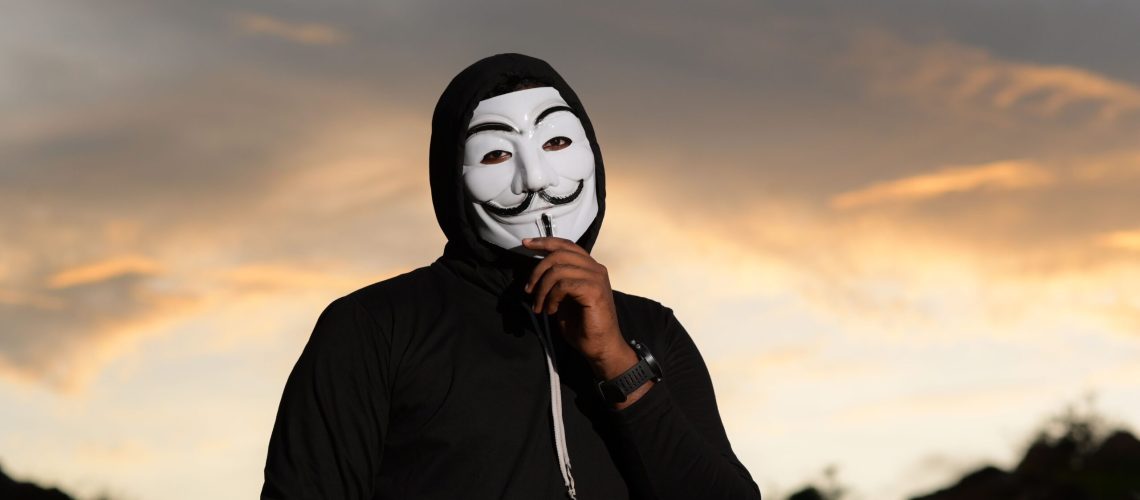
This is where the Health Vigilante arises.
Someone who proactively protects themselves against an unhealthy world, and takes full responsibility for their choices and subsequent outcomes, rather than blaming the world around them and hoping that it will make the right choices for them.
What a Health Vigilante Actually Is
A health vigilante is somebody who doesn’t accept modern social norms as healthy. They question the environment, conveniences and popular culture that surrounds them.
They derive a sense of purpose from proactively protecting their health, within a culture that often undermines it.
A health vigilante isn’t a fanatic. They’re not someone who counts every calorie, obsessively tracks every biomarker or turns life into an optimisation project. They are simply someone who has become more aware that the world around them is trying to shape their behaviour, and that many of the conveniences we’re encouraged to consume are working against our health rather than for it.
A Health Vigilante is someone who doesn’t outsource their health before doing their own due diligence and self-care. They trust that their body will heal when given the right conditions, and recognise that the greatest threats to our wellbeing are rarely dramatic or obvious. They’re woven into the food we eat, the stressful environments we live in, the way we work, move, rest, and the behaviours society has conditioned us to accept as normal. A Health Vigilante stays alert, questions the status quo, and takes full responsibility for protecting the most valuable asset they will ever own- their vitality.
A health vigilante is also able to recognise and avoid the insidious lifestyle patterns that have taken so many people, including friends and family, down a slow and slippery path of sickness and disease, while much of the world around them assumes it’s just a part of ageing, or simply the cards they were dealt.
A health vigilante is intuitively sceptical about the seductive trends and fads that excite and distract people from the less glamorous, yet timeless, fundamentals that have always supported our vitality. The same trends that now brand a good night of sleep as a ‘biohack’, infusions and injections as ‘longevity aids’, walking as ‘zone 2’ training, natural light as ‘circadian alignment’, eating real food as a type of diet, and eating at a sensible time as ‘time-restricted feeding.’
None of these things used to require a name, a protocol or a purchase. They were just part of a more ‘normal’ life. The fact that we now need reminding, rebranding and often re-selling to do them isn’t evidence that we’ve discovered something new about health. It’s evidence of how far our baseline of health has drifted.
As health vigilantes, we stay stubbornly grounded in the evolutionary principles that keep us in tune with, and sensitive to, the needs of our bodies and minds. We purposefully nurture and nourish the systems that allow us to fully experience this one life- our digestion, muscular system, nervous system, hormonal and metabolic health
A World Built to Take, Not Give
Our awareness enables us to see the ground slowly shifting beneath our feet, and to respect the power of the forces competing for our attention and our health. Left to run its current course, this trajectory doesn’t plateau, it compounds.
Our food is increasingly engineered to make us eat beyond our needs. Our sleep and recovery is increasingly sacrificed to technological distraction. Movement that was once woven naturally into everyday life is being engineered out by convenience. And the human connection we evolved to depend on is increasingly being replaced by screens. The further our environment pulls us away from what our bodies and minds evolved for, the greater the consequences.
The same systems currently optimising for our attention, appetite and reward systems are being refined to optimise for each of us specifically. Trained on our scroll patterns, our digital interactions and our individual weaknesses. The fishing net that once caught demographics of people is being upgraded to a fishing rod, cast at us individually with precision. This is the world we, and our children, are waking up to every day. It’s not a world that is neutral, but one actively getting better at claiming our attention and our energy.
The reality is that the food industry profits when we consume more cheaply made, poor quality and addictive foods, the technology industry profits the more distracted and hooked we are to their platforms, and the pharmaceutical industry profits from the fallout of our inability to moderate these powerful influences. This isn’t a conspiracy theory- it’s simply what happens when powerful commercial incentives intersect with predictable human behaviour.
GLP medications are a potent example of how we’ve built an economy that sells us the wound and the bandage separately, then calls the second sale a breakthrough.
The question is:
Have we become better at treating the consequences of an extreme environment than we have at changing the environment itself?
The Responsibility Sleight of Hand
Another, more subtle part of this equation is the way responsibility is handed back to the individual.
Companies tell us to ‘consume responsibly,’ tech platforms encourage us to manage our screen time, food companies tell us to ‘make healthy choices.’ It sounds responsible and even caring, but while we’re being encouraged to exercise restraint, enormous resources are being invested in making the products themselves harder to resist.
Food scientists optimise the crunch, texture, aroma, flavour and mouthfeel of processed foods, studying precisely how a product feels when you bite into it, how quickly its flavours release and how it encourages you to take another bite. Technology companies employ behavioural scientists and engineers to optimise notifications, feeds and recommendations for one thing: keeping us engaged. Then, after designing products and environments around our vulnerabilities, the responsibility is handed back to us and packaged as a caring concern for our wellbeing.
It’s like the casino handing you a pamphlet on responsible gambling while redesigning the slot machine’s payout algorithm in the next room.
We’ve seen this playbook before. The tobacco industry spent decades emphasising personal choice and individual responsibility, while simultaneously engineering cigarettes around nicotine delivery and addictiveness. The message was essentially: you are free to choose, and therefore responsible for the consequences of your choice. Today the language is more sophisticated, but the underlying contradiction remains.
The issue isn’t that we have no responsibility for our choices. We absolutely do. The issue is whether it’s reasonable to place the entire burden on the individual when the environment itself has been deliberately engineered to exploit our behaviour.
We evolved to seek calorie-dense foods, respond to novelty, pursue rewards and conserve energy. We didn’t evolve alongside unlimited access to hyper-palatable food, algorithmically optimised entertainment, and technologies built to compete relentlessly for our attention.
Asking willpower alone to hold this line is like asking a single lifeguard to hold back a rising tide with their bare hands, the tide isn’t cruel, it’s just doing what tides do, but at a scale no individual effort could ever match. This is why we now need something more than willpower, we need greater boundaries, standards and vigilance.
This isn’t a pessimistic statement. It may be one of the most liberating truths we can acknowledge, because once you see the incentives, you can stop mistaking them for your interests. You can recognise when something is designed to capture your attention, stimulate your appetite or encourage repeated consumption. You can stop interpreting every struggle with these products as a personal weakness, and start taking responsibility in a different way. Not through self-criticism but through self-respect and self-awareness. By becoming more deliberate about what you consume, where you invest your attention, and what you allow into your environment.
The truth is that no one is coming to save us, and our modern world isn’t going to get easier on our physical and mental health anytime soon. If anything, the coming decade points toward more finely-targeted claims on our attention, and our health. We have to take control and become more vigilant for ourselves, our families, and the people we care about.
Why Become a Health Vigilante?
Because your body is the only place you have to live, your energy determines what you can experience, and your health determines how much of your life you actually get to participate in.
Staying healthy was never simply about adding years to your life. It’s about protecting your ability to live the years you have, in a world that is currently making that more of a challenge.
It’s important to say clearly that this isn’t about being perfect. It’s about enjoying and celebrating a quality of life. Health shouldn’t be another source of guilt or anxiety, yet ironically, the very industry meant to save us from the ravages of modernity has learned to prey on our insecurities instead.
The wellness industry has turned health into a competition, and our fears into a marketing opportunity.
The Wellness Wolf in Sheep’s Clothing
Wellness can look like refuge, A gentler alternative to a conventional medical system that mostly intervenes once a lack of health already exists. A solution built for the modern lifestyles that are wearing us down. ‘Wellness’ speaks the language of healing, but look closer, and the sheepskin starts to slip away.
What dominates are trends such as biohacking, optimisation, longevity, supplements, wearables and productivity hacks. An entire industry rebuilt around the same hunger for more. The promise is seductive- outperform your biology, optimise your way to completion, engineer a superior version of yourself, one upgrade at a time. It’s the same escalation logic as the industries it claims to be the antidote to- Big Food, Big Tech and Big Pharma, just repackaged in the language of self-improvement instead of consumption.
Where those industries sold you more to eat and more to watch, wellness sells you more to fix, more to track, more to become. More is sold as better, and optimisation is sold as the finish line. A perpetual chase that leaves us feeling that health isn’t something we already have but something we are constantly falling short of.
Despite the wellness industry now being worth trillions of dollars, our collective health continues to deteriorate. Type 2 diabetes is spiralling out of control, depression is now one of the leading causes of disability worldwide, hypertension affects more than a billion people globally, and anxiety disorders continue to climb, particularly among younger adults- ironically the very demographic most immersed in wellness culture.
That contradiction should stop us in our tracks because if the answer really were more optimisation, more tracking, more biohacking, we’d expect these numbers to be improving, not worsening. Instead, the more we’re distracted by the gadgets, gizmos, injections and infusions, the further we seem to drift from the less sexy foundations of health. People are trying to build castles on quicksand instead of laying strong foundations.
We can’t biohack our way out of a life that is depleting us, no amount of red light therapy will compensate for naturally occurring food. No nootropic will compensate for a lack of genuine human connection. No cold plunge will cure the chronic stress of pursuing a life we don’t actually want. You can optimise every biomarker on a lab report and still come home every night to a life that is fundamentally out of step with who you are.
Health is not simply the absence of disease, or a dashboard of optimised biomarkers. It’s the by-product of living in sufficient harmony with the natural environments and conditions that have shaped our biology over hundreds of thousands of years. The more we remove these, the more vulnerable we become.
This is why the fundamentals will always heal us- regular physical activity, natural light, quality rest, human connection and naturally occurring food. These aren’t wellness trends. They are enduring features of the environment in which our human biology has been optimised. Supplements, wearables, injections and infusions may be able to support these foundations, but they will never be able to replace them.
The Spirit of the Health Vigilante
Being a health vigilante is simply about protecting the things that really matter, and refusing to accept unhealthy social norms as inevitable. It’s not about rejecting modern life, it’s about adapting to it. If that means being seen as eccentric or extreme, so be it. Be more extreme about moving and nourishing your body, protecting your sleep, being present for the people you love, and regularly quietening your mind. Be extreme if it means questioning the extremes that have now become normal.
Perhaps what the world needs isn’t another movement telling us how to optimise or perfect our health. Maybe it just needs a movement to remind us that our health is a cause worthy of greater priority. If we are willing to fight for our national identity. stand behind political ideologies, defend our religions, wear the colours of our sports teams and passionately defend the things we believe represent us, then we should bring this level of conviction to our health. Not from a place of fear or obsession, but from a place of self-respect, wisdom and radical ownership.
This is the spirit of the Health Vigilante: to stand guard over the fortress of our health, make it a priority, an identity, a hard boundary, and a non-negotiable foundation of our life in an increasingly unhealthy world.